
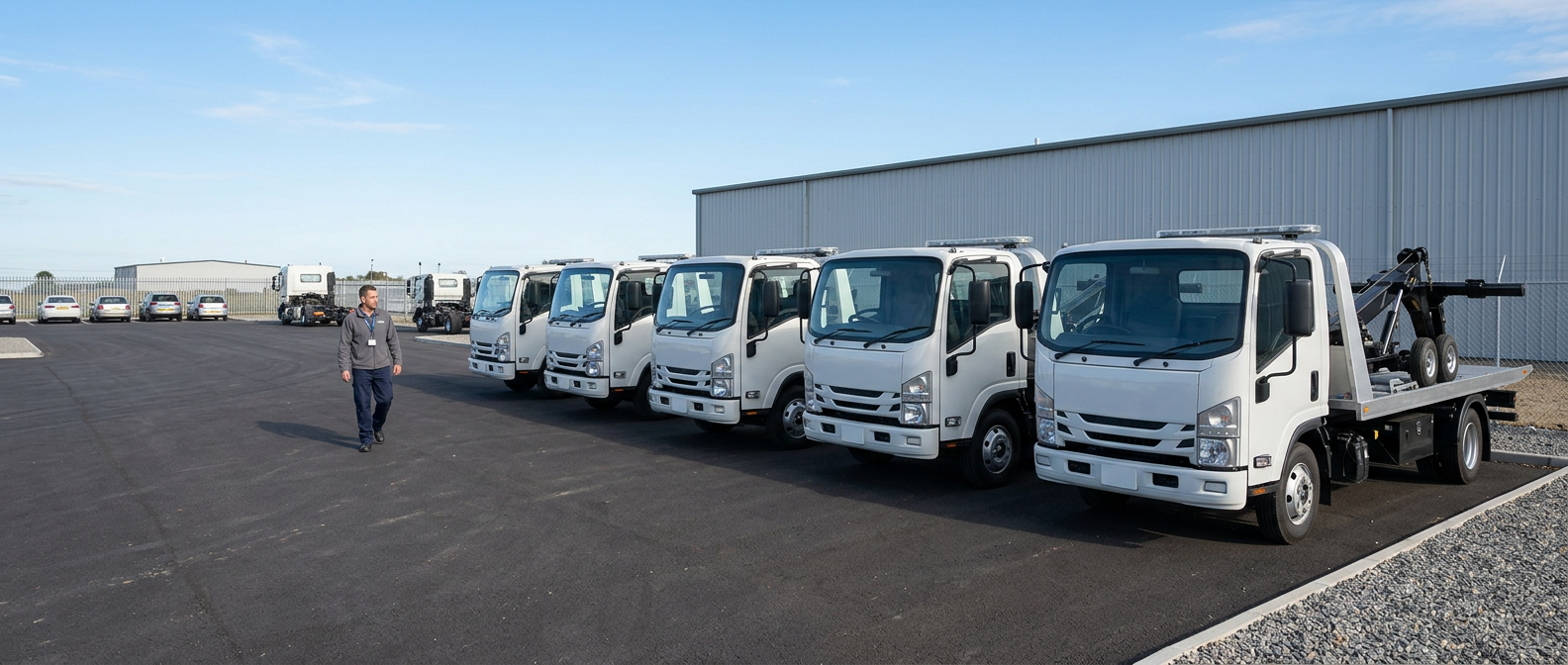
Two lifting architectures define towing equipment: the wheel lift, which cradles a passenger vehicle's wheels on a light-duty boom so two wheels roll; and the underlift, which reaches under a truck's axle or frame to lift the whole end of a commercial vehicle. Different equipment, different vehicle classes, different duty — and often the same operator owns both.
Attachment procedure belongs to manufacturer-trained operators; this guide covers the equipment classes in business terms only.
WHEEL LIFT — THE LIGHT-DUTY STANDARD
UNDERLIFT — THE HEAVY TOOL
CONFIGURING A WRECKER?
Start the application with the package quote attached — wheel-lift or underlift, one application carries the build.
START YOUR APPLICATIONWHICH ONE DOES THE BUSINESS NEED?
The account mix answers the question: rotation and collision work runs wheel lifts and carriers; truck traffic, resource regions and fleet contracts run underlifts and heavy wreckers. Many operations run both — light-duty volume pays the week, heavy calls make the year. Financing options may be available for qualifying equipment in either class; eligibility depends on the applicant, asset, vehicle/chassis configuration, transaction, vendor, program and jurisdiction.
REVIEWING USED LIFTING EQUIPMENT
FREQUENTLY ASKED QUESTIONS
POPULAR FIXFIN QUESTIONS
Can I finance used automotive equipment?
USED EQUIPMENT GUIDE
Can I finance a complete shop?
COMPLETE SHOP CHECKLIST
What equipment does an auto repair shop need?
COMPLETE SHOP GUIDE
Two-post or four-post lift?
LIFT COMPARISON GUIDE
Can installation and freight be included in financing?
INSTALLATION & FREIGHT GUIDE
Can an auto shop finance commercial HVAC?
SHOP HVAC GUIDE
Can my equipment dealer start the application?
CUSTOMER HANDOFF GUIDE
Can I finance a complete mobile service van?
MOBILE SERVICE GUIDE
Do I need a quote before applying?
QUOTE CHECKLIST