
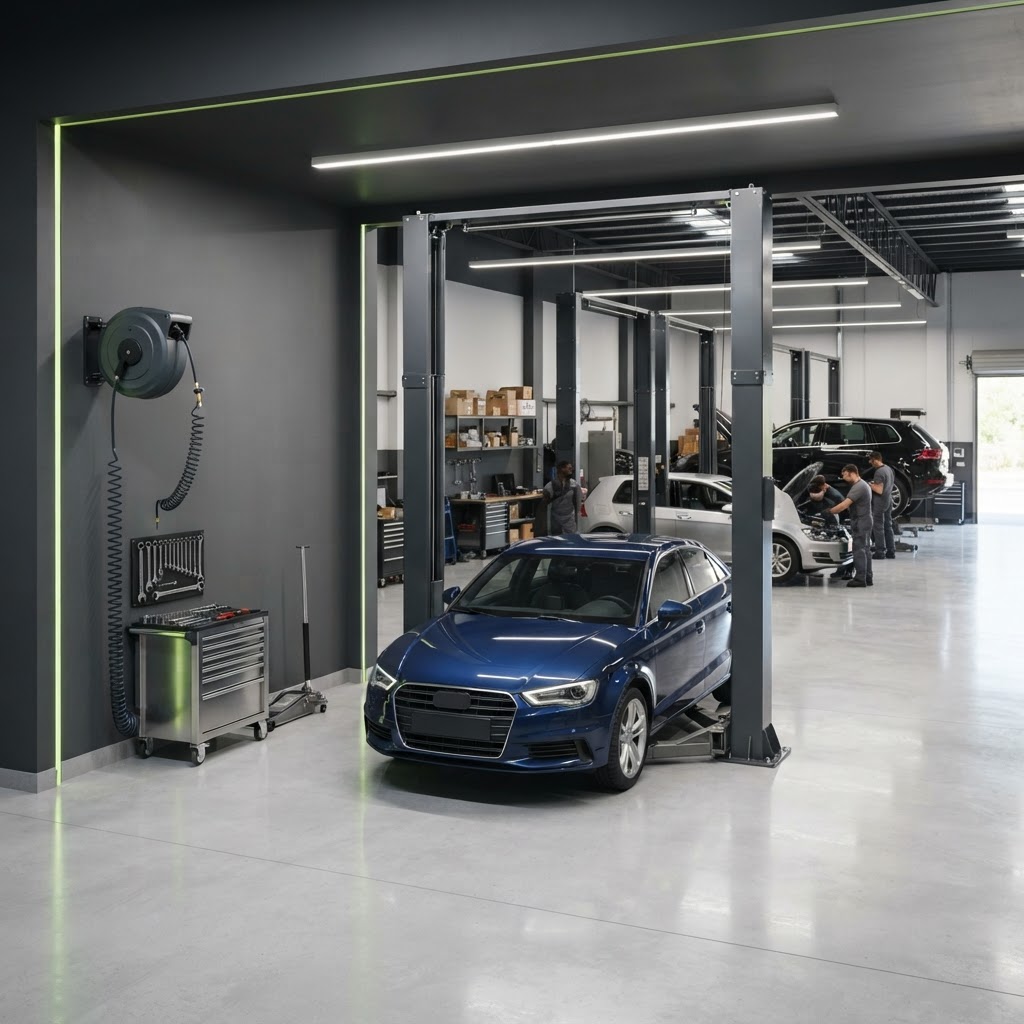
The vehicle lift is usually the single largest equipment purchase in a service bay — and the two dominant families, two-post and four-post, fit different kinds of work. Neither is universally better. The right choice depends on what your shop actually does.
THE SHORT ANSWER
Two-post lifts lift the vehicle by its frame or designated lifting points on swing arms, leaving the wheels and much of the undercarriage open — which is why they're the standard choice for wheel-off service such as brakes, tires and suspension work.
Four-post lifts are drive-on platforms: the vehicle rolls onto runways and is lifted with its wheels supported. That makes them convenient for quick-lift workflows, vehicle holding between services, and alignment-capable rack configurations designed by the manufacturer.
TWO-POST LIFTS — WHERE THEY FIT
CHOOSING A LIFT?
One lift or a full row of bays — describe the equipment in one application and upload the dealer quote.
START YOUR APPLICATIONFOUR-POST LIFTS — WHERE THEY FIT
WHAT TO CONSIDER BEFORE CHOOSING
Structural, anchoring and installation questions belong with the lift manufacturer's documentation and a qualified installer — not with a financing guide.
FREQUENTLY ASKED QUESTIONS
POPULAR FIXFIN QUESTIONS
Can I finance used automotive equipment?
USED EQUIPMENT GUIDE
Can I finance a complete shop?
COMPLETE SHOP CHECKLIST
What equipment does an auto repair shop need?
COMPLETE SHOP GUIDE
Two-post or four-post lift?
LIFT COMPARISON GUIDE
Can installation and freight be included in financing?
INSTALLATION & FREIGHT GUIDE
Can an auto shop finance commercial HVAC?
SHOP HVAC GUIDE
Can my equipment dealer start the application?
CUSTOMER HANDOFF GUIDE
Can I finance a complete mobile service van?
MOBILE SERVICE GUIDE
Do I need a quote before applying?
QUOTE CHECKLIST