
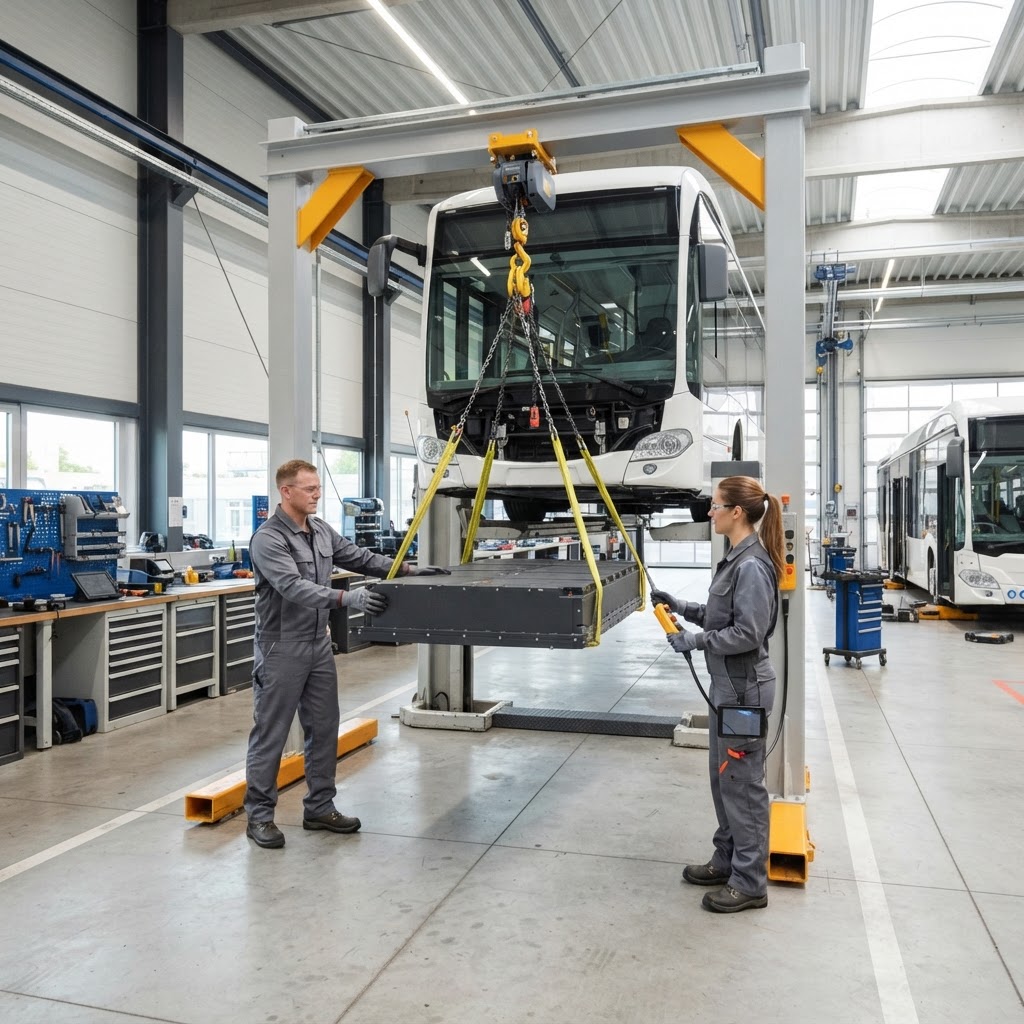
Lifting is the first and most consequential decision in a bus facility: it sets what the shop can service, how fast bays turn, and what the fleet can grow into. Buses are long, heavy, and — in their electric variants — carrying tonne-class battery packs that add their own handling question.
This guide walks the lifting and bay options for bus service and how to think about them. One boundary throughout: lifting and under-vehicle work safety — lift points, support methods, load ratings — follows manufacturer requirements and qualified supervision, not internet guides. This is facility planning, not a lifting procedure.
THE LIFTING DECISION
Every bus facility answers the same three questions.
MOBILE COLUMN LIFTS
The depot standard for a reason.
FINANCING FOR HEAVY LIFTING
Start the application and upload the lift quote — lifting, installation and handling systems can be structured as one bay project.
START YOUR APPLICATIONINGROUND, PLATFORM & PARALLELOGRAM SYSTEMS
Fixed installations for high-throughput positions.
BAY DESIGN CONSIDERATIONS
The bay fits the vehicle — never the reverse.
THE EV OVERLAY
Electric buses change what happens under and around the vehicle.
NEW VS USED LIFTING EQUIPMENT
Lifts are decades-lived assets with a real used market.
FREQUENTLY ASKED QUESTIONS
POPULAR FIXFIN QUESTIONS
Can I finance used automotive equipment?
USED EQUIPMENT GUIDE
Can I finance a complete shop?
COMPLETE SHOP CHECKLIST
What equipment does an auto repair shop need?
COMPLETE SHOP GUIDE
Two-post or four-post lift?
LIFT COMPARISON GUIDE
Can installation and freight be included in financing?
INSTALLATION & FREIGHT GUIDE
Can an auto shop finance commercial HVAC?
SHOP HVAC GUIDE
Can my equipment dealer start the application?
CUSTOMER HANDOFF GUIDE
Can I finance a complete mobile service van?
MOBILE SERVICE GUIDE
Do I need a quote before applying?
QUOTE CHECKLIST